Proven Partnerships
Builder collaboration helps teams solve challenges earlier and maintain alignment throughout project execution.


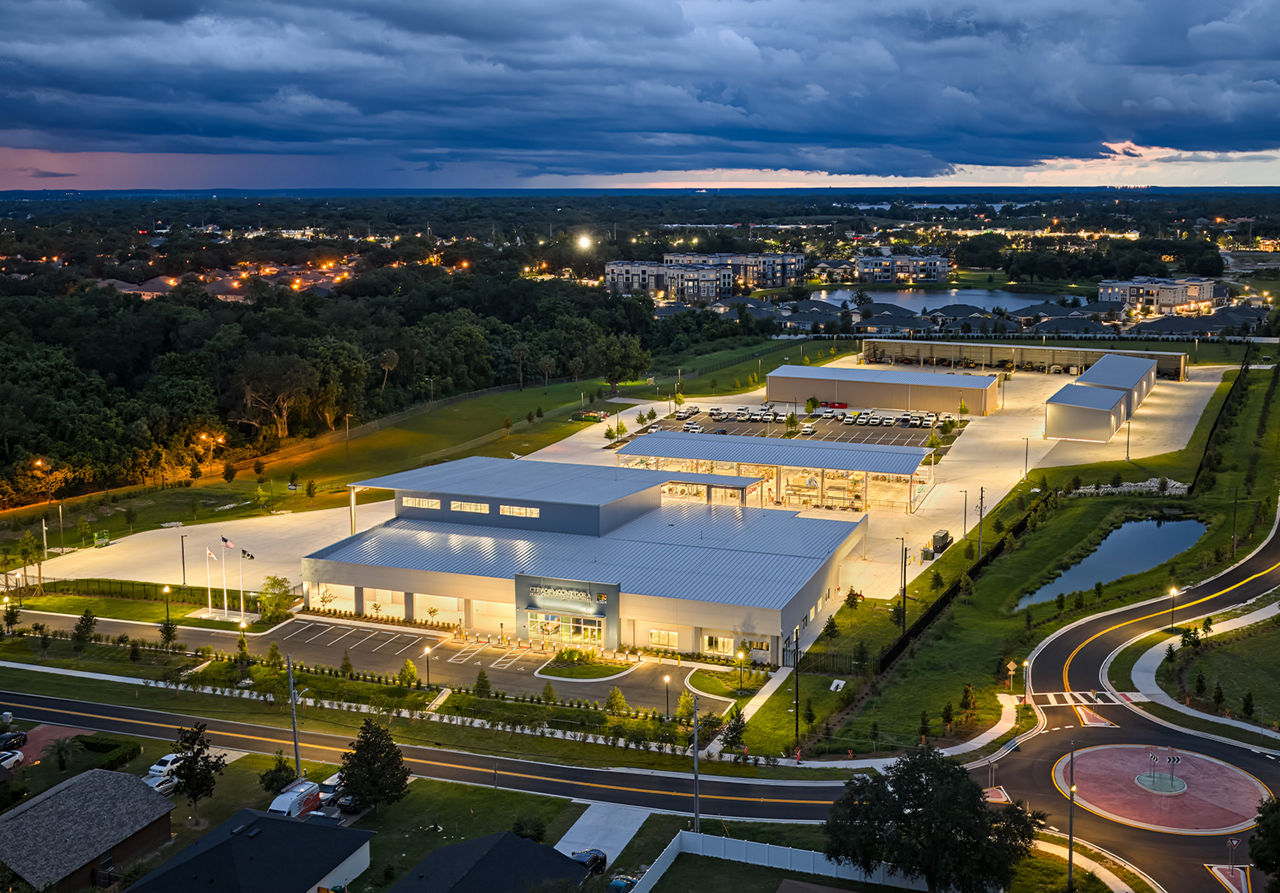
Engineered components, designed to the specifics of the project and fabricated before they ship. See what a VP PEMB makes possible.
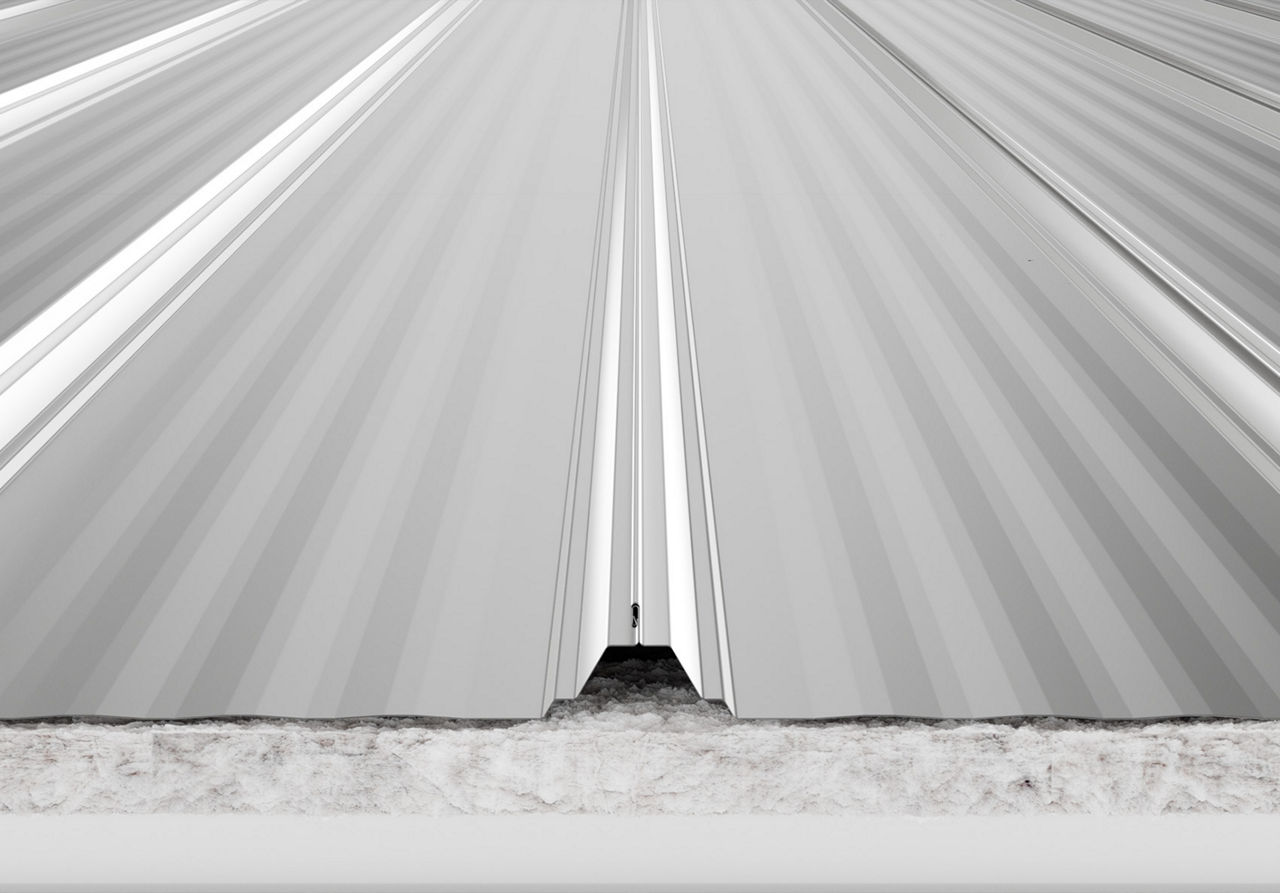
The standing seam roof with millions of square feet in service, machine-seamed into a single protective membrane.

Mission-critical work calls for proven structural solutions. VP has shaped data center campuses across North America for the developers building the digital backbone.

Facing weather limitations and increasing demand for year-round training, Fort Hays State University set out to create a multi-sport indoor facility that could perform across programs without exceeding budget or schedule constraints. Working closely with its builder partner, the team developed a clear-span solution that maximized usable space while integrating functional training zones, daylighting and architectural continuity with the surrounding campus.

Builder collaboration helps teams solve challenges earlier and maintain alignment throughout project execution.
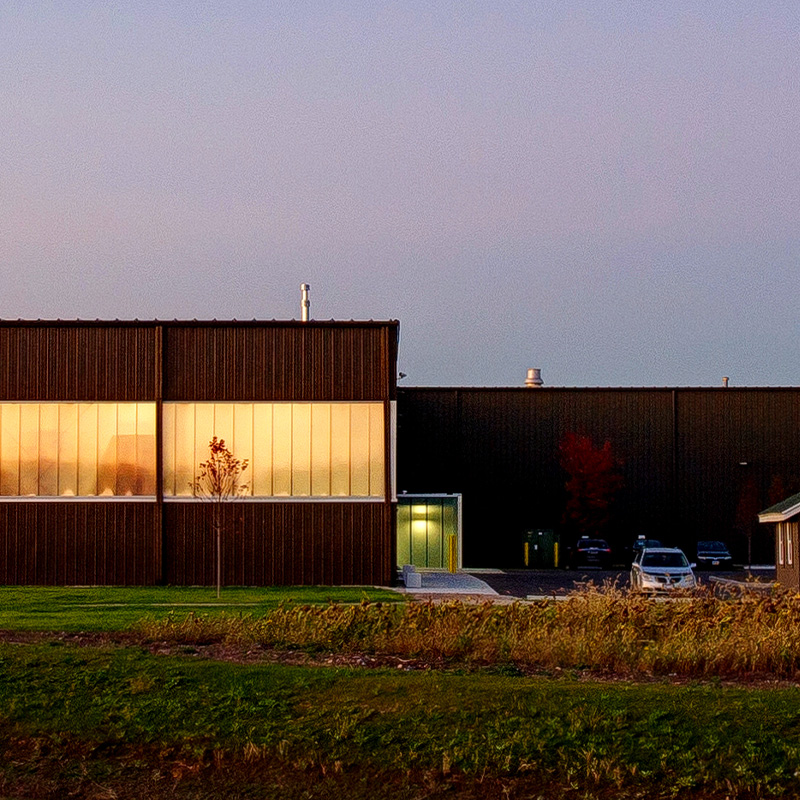
From trims to textures, every design detail can be personalized to your project vision.
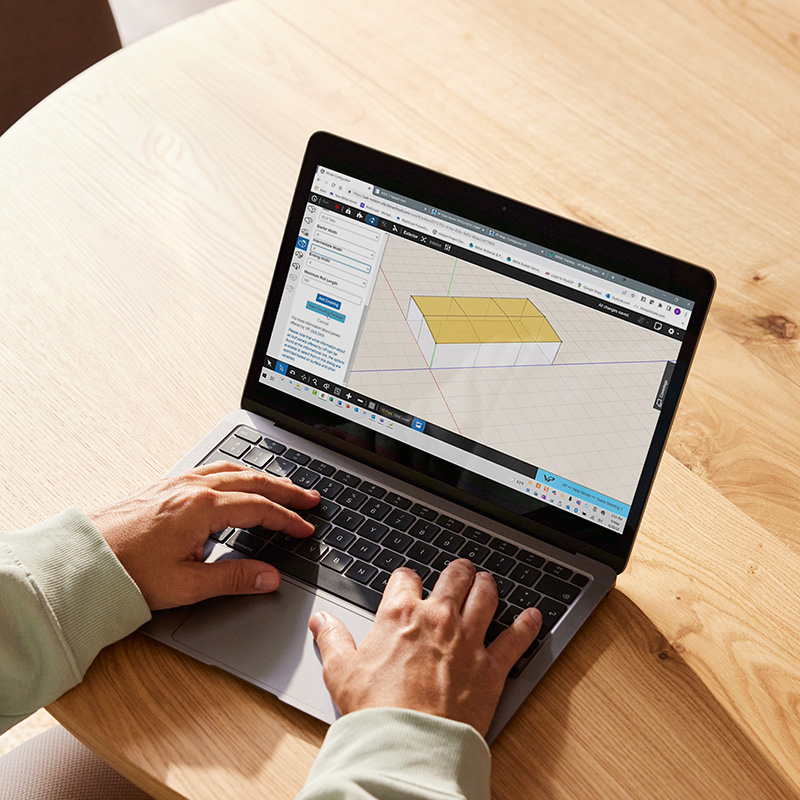
Our panel systems blend beautifully into surrounding architecture and landscapes.
Fort Hays State University Indoor Practice Facility
In Hays, KS, Fort Hays State University set a clear objective: create a facility that allows athletes to train consistently, regardless of weather conditions. The need extended across multiple programs, including football, baseball and track, each with distinct spatial and performance requirements.
The challenge was not just capacity. It was adaptability. The university needed a solution that could support different training environments within a single structure while maintaining efficiency in both cost and schedule.
Working with QMC, Inc., the project team approached the facility as a coordinated solution rather than a fixed design. From the outset, collaboration shaped the outcome, aligning performance needs, budget parameters and construction timelines into a buildable path forward.
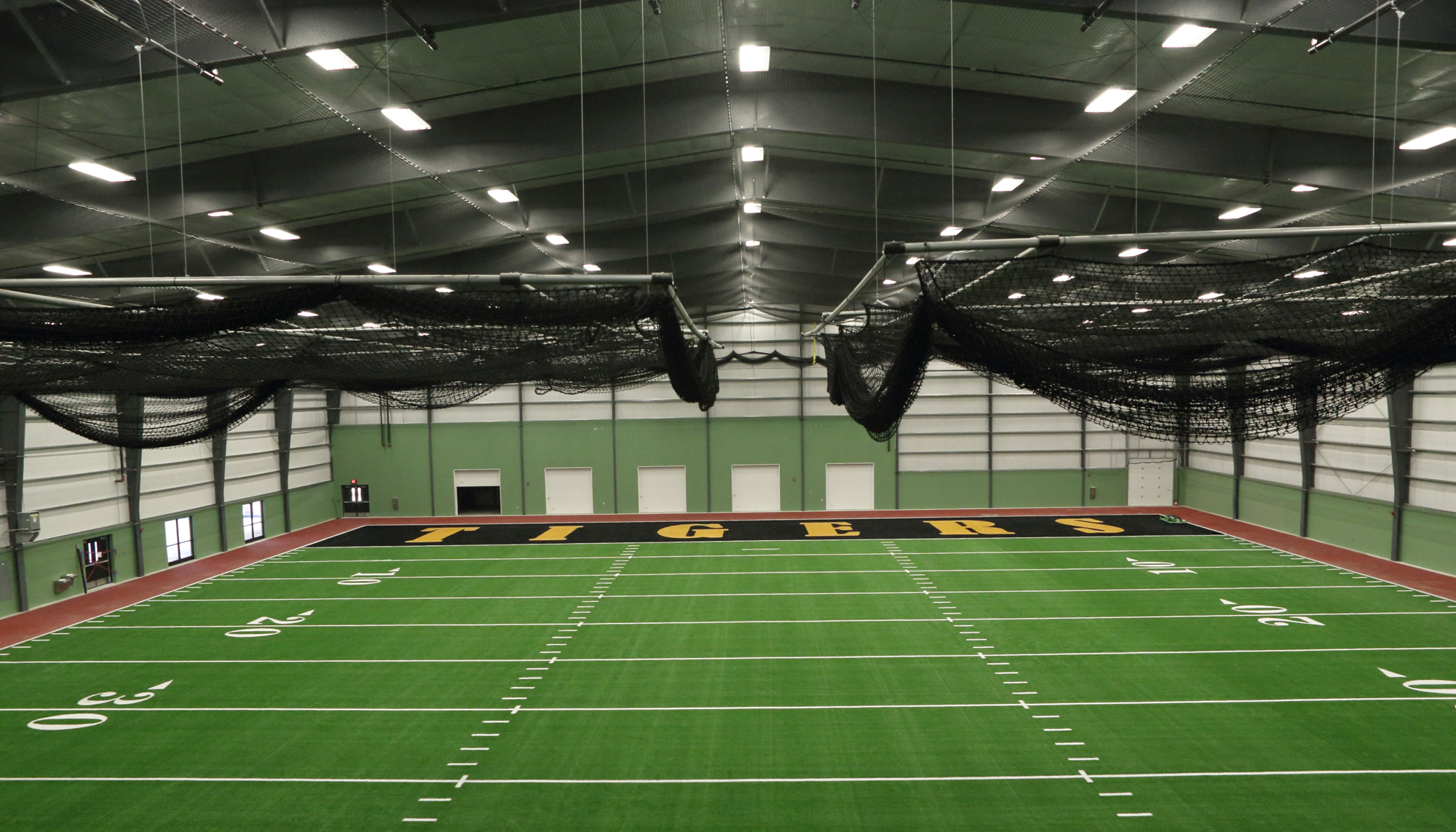
The resulting 50,400-square-foot facility is anchored by 186-foot clear-span framing, creating uninterrupted space that allows multiple training programs to operate simultaneously. That span was not simply a structural choice. It was a functional decision that removed limitations and opened the building to flexible use.
Within that footprint, the facility supports a full-width, 65-yard football field with artificial turf, a 70-yard track with jump pits, batting cages and dedicated areas for strength training. Each element was positioned to maximize flow and usability without compromising the overall efficiency of the structure.
Interior protection systems, including integrated netting, allow different training activities to occur safely within the same environment. Supporting spaces, including locker rooms, storage and a team meeting room, extend the building’s role beyond training, reinforcing its function as a complete athletic resource.
This approach reflects a core principle in Varco Pruden™ solutions: flexibility is not an add-on. It is engineered into the process from the beginning, allowing the building to adapt to the needs of the programs it serves.
With a defined timeline and budget, execution required more than a strong design. It required coordination across detailing, fabrication and construction.
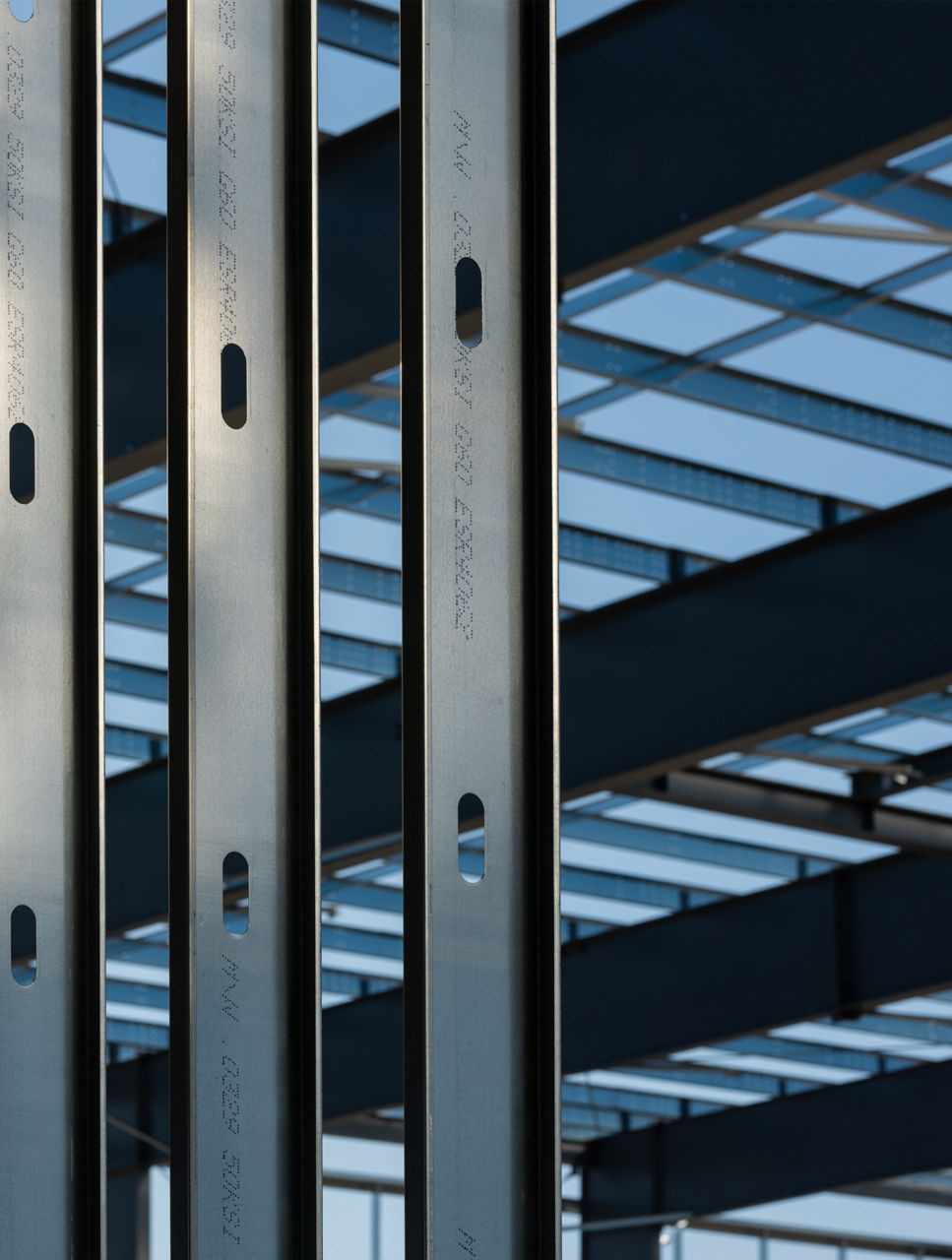
The clearspan system simplified structural complexity while accelerating installation. Exposed framing contributes to both efficiency and aesthetics, reducing the need for additional finishes while delivering a clean, intentional interior expression.
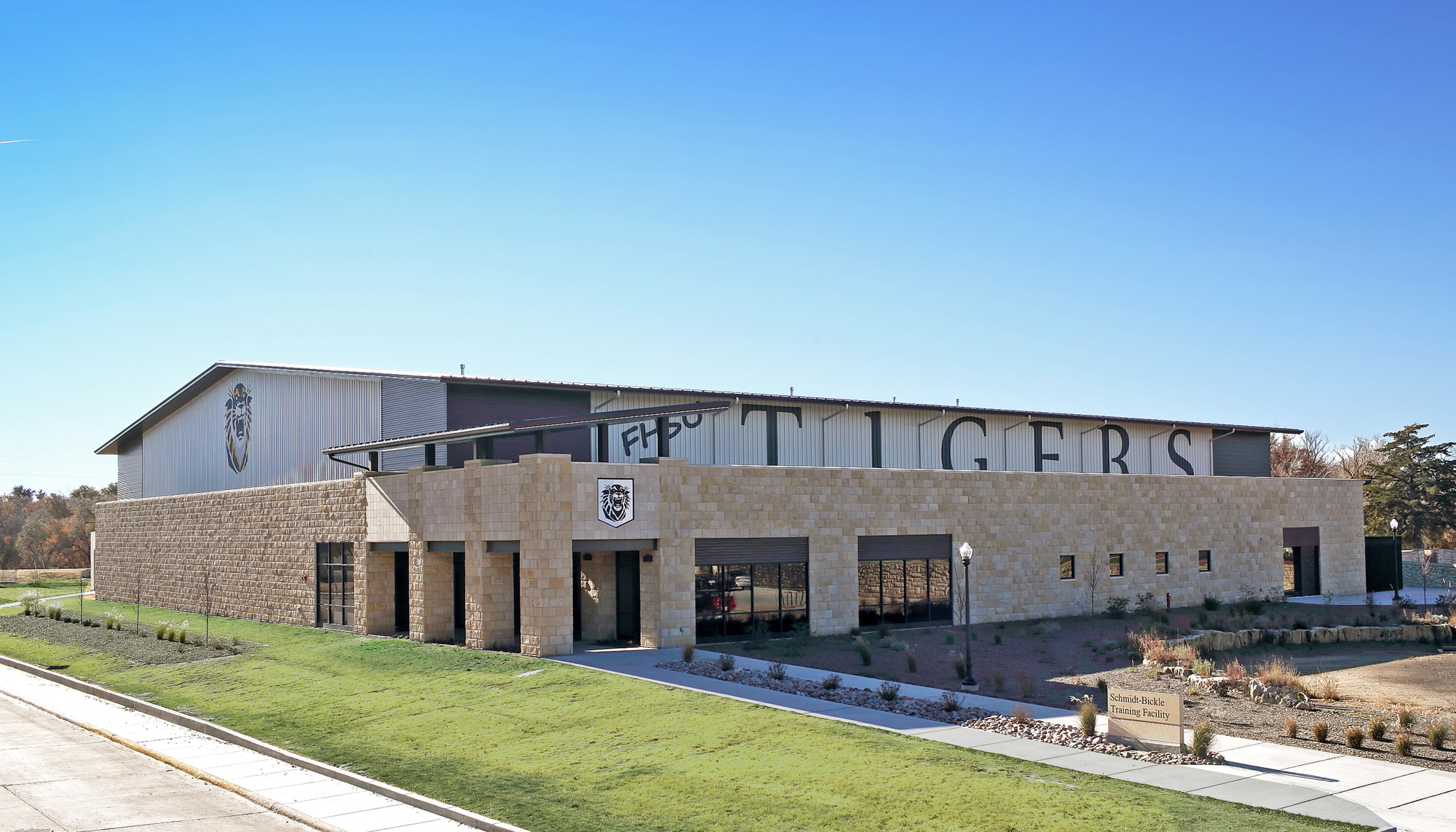
At the building entrance, a canopy supported by fixed-base 12-inch by 12-inch columns and inset rafters eliminates the need for brace rods. This detail improves both visual clarity and constructability, demonstrating how thoughtful engineering decisions can serve multiple purposes.
Daylighting strategies were also integrated into the system. Linear and prismatic skylights reduce reliance on artificial lighting during daylight hours, improving energy performance while enhancing the training environment.
These decisions reflect a process that prioritizes clarity where each component is evaluated not just for what it does, but how it contributes to the overall outcome.
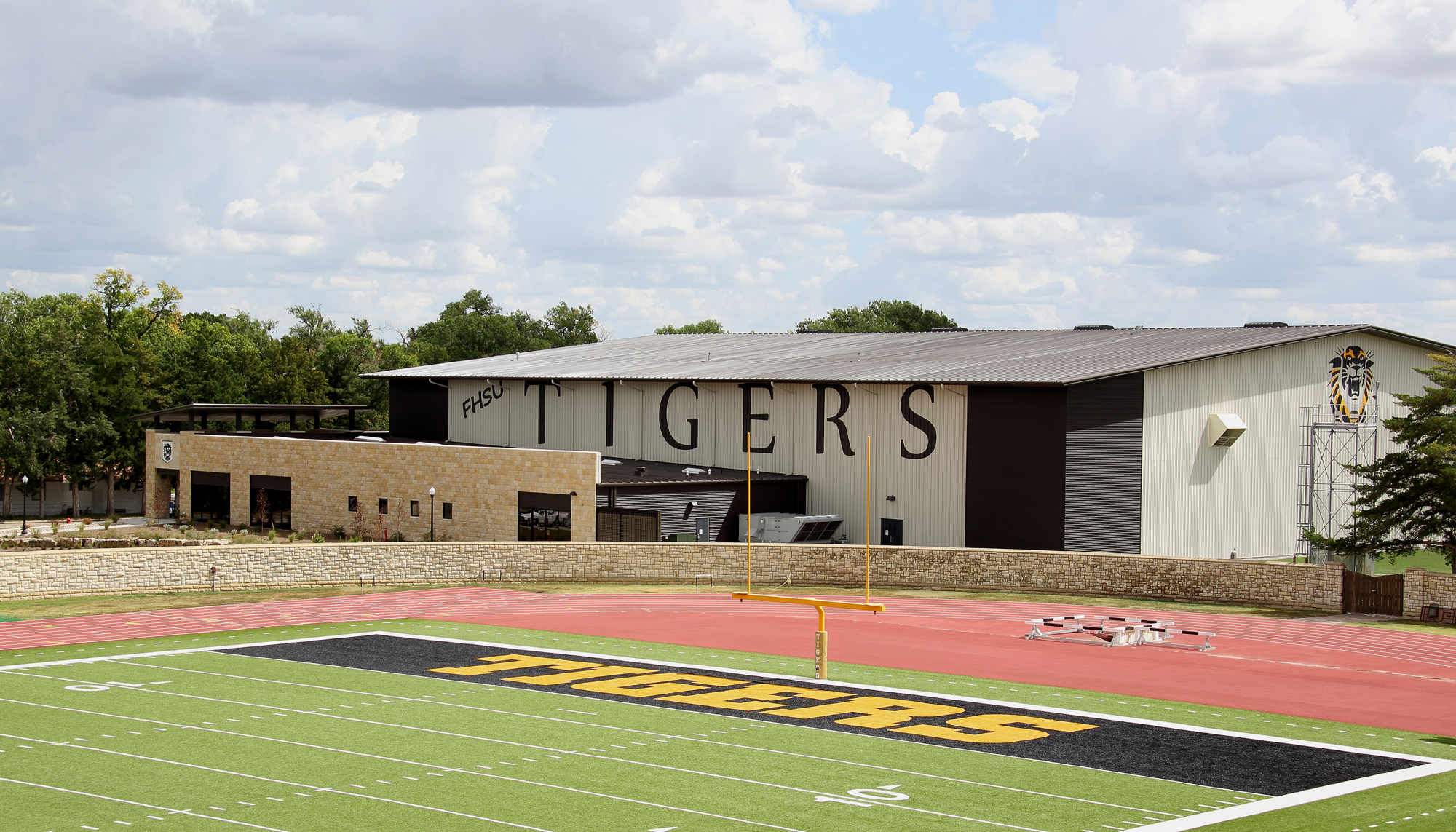
While performance drove the interior, context shaped the exterior. Fort Hays State University is known for its use of native limestone and maintaining that architectural continuity was essential.
The facility incorporates a limestone façade that aligns with the surrounding campus, particularly the adjacent Lewis Field Stadium. This was not a surface-level decision. It ensured the building felt like part of the school’s existing identity rather than a standalone addition.
That balance—between function and fit—is where collaboration plays its most important role. By working closely with the builder and aligning with the school’s priorities, the team delivered a structure that meets performance needs while reinforcing a sense of place.
Today, the facility provides a consistent, adaptable environment for student-athletes. Weather is no longer a constraint. Training schedules are more reliable. Programs can operate in parallel without competing for space.
More importantly, the building is positioned to evolve. Its open span, flexible layout and integrated systems allow it to adapt as athletic needs change over time.
This is where Varco Pruden’s approach is most evident. The outcome is not just a completed structure. It is a solution shaped through collaboration, designed with intent and delivered with the flexibility to keep moving forward.
Because when the right partners come together with a shared goal, the result is not just a building. It is a better way to build.
Tell us what you’re solving for. Share your challenges, timeline and aspirations, and we'll bring the engineering insight and practical creativity to shape ambitious, lasting structures, together.